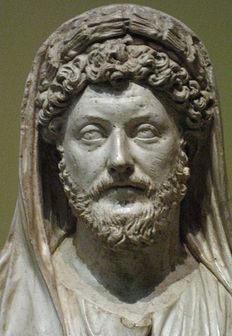
 It is International Stoicism Week. Many of the exercises in From Rebel to Ruler are inspired by Roman Stoicism; many people today are unfamiliar with this influential philosophical school. Here are a few frequently asked questions to clear things up:
Q: Doesn't "stoic" mean to hide your feelings? A: No, that is the popularization of the word. Q: Why should anyone care? A: Almost every great leader and thinker of one of the greatest empires that ever existed (Rome) were schooled in, or in heavy contact with, this philosophy. In addition, many influential and remarkable people throughout the past 2000 years were fans of Stoicism. Many parts of George Washington's farewell address are extensive (unquoted) quotes from Epictetus. Q: Ok, ok, what is it in a nutshell? A: First, realize that Stoicism was education and education was Stoicism. There were other philosophical schools, like the Epicureans, but when the leadership classes went to school, they were learning Stoicism. Later, they would obtain a mentor and stay in contact with that mentor throughout their lives. Some of the most famous Stoic writings are the letters that Seneca sent to his protégé, Lucilius. Q: Didn't the Roman Empire fall? A: Yes. But the Pax Romana - Rome's golden age - had several emperors who were strong adherents of Stoicism. The diary of Marcus Aurelius, called the Meditations of Marcus Aurelius, at the bitter end of this period, are some of the most famous Stoic writings. Q: Is there a summary? A: Different writers give it different flavors, but there are a few themes that recur. Stoics emphasize courage, friendship, and tranquility. In talking about the "brotherhood of man" they criticize slavery, which is thousands of years ahead of its time. They urge frequent self-reflection and encourage people to confront problems head on. They want students to divide the world into the things that they can control (not very much) and the things that they cannot control; no one should waste a second of worry on things they cannot control. Q: What is a good place to start? A: It depends on you. Three philosophers stand out, and they come from three very different perspectives. Epictetus was a slave who rose to become the tutor of Emperor Nero. Seneca was a businessman, playwright and tutored Caligula and Nero. Marcus Aurelius was emperor at the height of Rome's power, but was renowned for his kindness (absolute power did not corrupt). Q: Is it appropriate for students? A: Absolutely. It was designed for students, and many of the influential people who studied it in the past 2000 years studied it when they were students. It is also easy to read just a little bit or a lot, and involve a lot of "active literacies" - writing and public speaking. And its goals are very relevant to students today: leadership, friendship, and tranquility.
0 Comments
Leave a Reply. |
AuthorI'm an entrepreneur and I teach math, history, economics, and fitness. I'm looking for arguments. Archives
November 2019
|
 RSS Feed